Author

Abdul Cizen Siddiqui

English Learning Guide for Bhopal

Spoken English Classes in Bhopal: Fees, Course Duration and How to Choose the Right Institute

Searching for English-speaking courses in Bhopal can quickly become difficult. Many institutes offer fluency and confidence training, but their methodology, costs and course duration may vary greatly.

Apart from understanding English grammar, a learner must know how to frame sentences, build vocabulary and speak fluently without hesitation.

In this guide, we discuss the costs and course duration you can expect, along with the important points to consider before joining an English speaking course in Bhopal.

Who Should Join a Spoken English Course?

A spoken English course can be helpful if you:

  • Understand English but hesitate while speaking
  • Translate every sentence from Hindi to English
  • Struggle to find the right words during conversations
  • Feel nervous during interviews or presentations
  • Make frequent grammar mistakes while speaking
  • Want to improve pronunciation and vocabulary
  • Need English for education, employment or professional growth

Spoken English is not limited to students. Job seekers, working professionals, business owners, teachers and homemakers can also benefit from structured speaking practice.

What Are the Spoken English Course Fees in Bhopal?

The charges for spoken English classes in Bhopal vary depending on the course level, duration, mode of learning, trainer experience and facilities included.

Factors Affecting the Cost of Courses

Course Level

The cost of a basic course is generally lower than that of an advanced course covering public speaking, interviews, presentations and professional communication.

Online or Classroom Training

Online courses may be more affordable because learners can study from home. Classroom courses may cost more when they include activities, group discussions and direct assistance from trainers.

Group or Personal Classes

Personal training generally costs more because the course is customised for one learner. Group classes are usually more affordable.

Course Duration

A short foundation course may cost less than a comprehensive programme spanning several months.

Learning Material and Assistance

There may be separate charges for books, recordings, tests and certificates. Always confirm what is included in the total fee.

Important: Course fees and offers may change. Contact the institute directly and request the complete current fee structure before making a payment.

Questions to Ask About Fees

  • What is the complete course fee?
  • Are books or learning materials included?
  • Are there any registration or examination charges?
  • Is access to recorded content included?
  • Is there a trial or demo class?
  • What happens if a student misses a class?
  • Is the fee refundable or transferable?
  • Will the student receive support after completing the course?

Do not choose a course only because it is the cheapest. A low-cost programme with little speaking practice may not provide the improvement you need.

How Long Does a Spoken English Course Take?

There is no single duration that works for every learner. The appropriate course length depends on your present English level, learning goals and daily practice.

Is Course Duration More Important Than Practice?

Absolutely not. A lengthy course does not necessarily result in fluency.

A person enrolled in a three-month course who does not practise consistently may progress more slowly than someone taking a shorter course who practises every day.

What Should a Good Spoken English Course Include?

Before joining an English speaking institute in Bhopal, examine what students actually do during the class.

Daily Speaking Practice

Learners should receive regular opportunities to speak, ask questions and participate in conversations.

Practical Grammar

Grammar should be connected with sentence formation and everyday communication instead of being taught only as theory.

Vocabulary Development

Students should learn useful words in context and understand how to use them naturally while speaking.

Personal Feedback

Constructive correction helps learners recognise and improve their speaking, pronunciation and grammar mistakes.

Level-Based Learning

The programme should match the learner’s current ability instead of giving beginners and advanced speakers identical lessons.

Real-Life Communication

Practice should include introductions, interviews, presentations, telephone calls and other practical situations.

Online or Offline Spoken English Classes: Which Is Better?

Both options can work when a course provides structured practice and useful feedback.

Choose Online Classes When:

  • You need flexible learning
  • You live far from the institute
  • You prefer learning from home
  • You want access to recorded lessons
  • Travelling regularly is difficult

Choose Classroom Training When:

  • You learn better through face-to-face interaction
  • You need a fixed routine
  • You want regular group activities
  • You feel more focused in a classroom
  • You want immediate trainer interaction

The better option is the one you can attend consistently and use for regular speaking practice.

How to Choose the Right Spoken English Institute in Bhopal

  1. Identify your goal: Decide whether you need English for daily communication, education, interviews or professional growth.
  2. Attend a demo class: Observe the trainer’s teaching style and how much students participate.
  3. Check the teaching method: Look for practical speaking activities, feedback and revision.
  4. Examine reviews carefully: Read detailed reviews about teaching, support and the learning experience.
  5. Ask about batch size: Make sure each learner receives enough time to speak and ask questions.
  6. Compare the complete fee: Check what the price includes before comparing institutes.
  7. Check the location and timings: Choose a batch that you can attend consistently.
  8. Avoid unrealistic promises: Meaningful fluency requires instruction, correction and regular practice.

Importance of Vocabulary for Fluency in English

Grammar helps in constructing a sentence, but vocabulary helps you say something meaningful.

Many people understand grammar but get stuck while speaking because they cannot recall the correct word. This often happens because memorising isolated words does not create a strong or useful connection in the mind.

Another approach is to learn vocabulary through characters, situations, stories and meaningful associations. This can make words easier to recall and use in conversation.

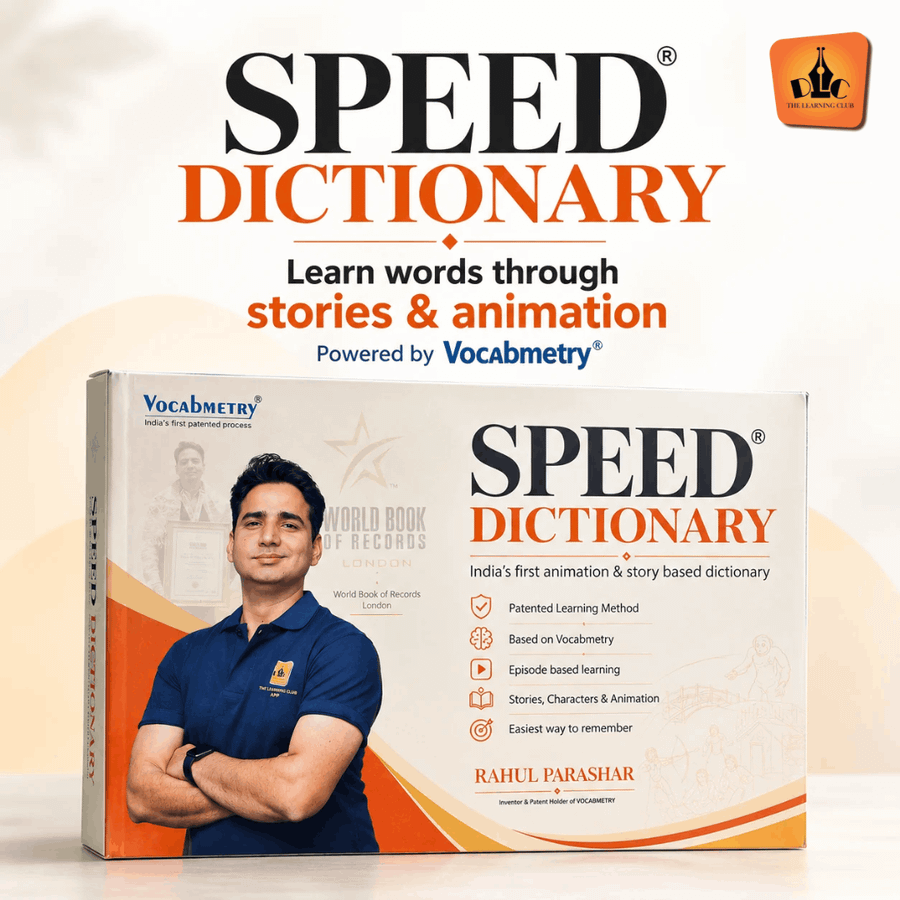
Students can also explore DLC’s vocabulary learning book and other learning resources.

English Language Learning with DLC The Learning Club

DLC The Learning Club offers learning programmes for Spoken English, Vocabulary and Grammar. Its learning process emphasises helping students understand and remember concepts instead of relying only on mechanical memorisation.

The learning process known as Vocabmetry uses characters, stories and memory-oriented explanations for vocabulary words. Students can relate words to situations and use them with greater confidence while speaking.

Students looking for spoken English classes in Bhopal can contact DLC The Learning Club to ask about:

  • Levels of courses offered
  • Current fees and offers
  • Course duration
  • Online or classroom availability
  • Batch timings
  • Learning materials
  • Demo or counselling services

Frequently Asked Questions

Which is the best spoken English course in Bhopal?

Your choice should be based on your present level and learning objective. Compare the teaching technique, speaking sessions, trainer guidance, class size, fees and duration before choosing a course.

What is the fee structure for spoken English courses in Bhopal?

Fees depend on the course level, duration, mode of learning and facilities provided. Contact the institute directly for its current and complete fee structure.

Is it possible to learn spoken English within three months?

Many students can make noticeable progress within three months through regular classes and practice. The result depends on the learner’s starting level, attendance and consistency.

Can I improve my spoken English without strong grammar?

You can begin speaking with basic grammar, but improving your grammar will help you communicate more clearly and accurately.

Are online spoken English classes useful?

Yes. Online classes can be effective when they include interaction, speaking practice, trainer feedback and structured learning.

How can I overcome my fear of speaking English?

Start with short sentences, practise every day, record yourself and participate in conversations. Regular speaking in a supportive environment gradually reduces hesitation.

Does DLC The Learning Club conduct vocabulary and grammar classes?

Yes. DLC The Learning Club offers learning courses in Spoken English, vocabulary and English grammar. Availability may vary by course and batch.

Take a Step Towards Confident English

A spoken English course should not be chosen only on the basis of advertisements or fees. Look for speaking practice, vocabulary improvement, easy-to-understand grammar, proper feedback and opportunities to communicate in real situations.

For information about Spoken English classes in Bhopal, current fees, batches and course availability, contact DLC The Learning Club.

DLC The Learning Club
Ground Floor, Kailash Darshan Complex, Plot 116,
Near City Hospital, Zone-II, Maharana Pratap Nagar,
Bhopal, Madhya Pradesh 462011

Phone: +91 89897 80888
0 comment
0 FacebookTwitterPinterestEmail
The Real Reason Your Child Studies Hard But Scores Less

Every parent has seen this situation.

Your child will sit with their books for hours.

They will do their homework. They will go to class.

They will even review their work before the exams.

They will tell you that they studied everything.

Then the results come out.

The grades are still lower, than what you thought they would be.

This is the part:

The child is trying really hard. The parents are helping out. The teachers are doing their job.. The childs grades are not getting better.

What parents start thinking

So parents will start to think:

Maybe my child is not paying attention.

Maybe my child is not taking this seriously.

Maybe they are not putting in time to study.

Maybe they are just wasting their time.

But pause for a second

What if the child is not being lazy.

What if your child is studying hard but their brain is not able to remember things in the right way.

That is where the real problem starts.

Your child is studying hard. The brain is not retaining the information in the right way.

Hard work is not always equal to marks.

Many kids study for a time but they do not really understand what they are studying.

They read the chapter over and over again.

They underline some sentences.

They try to memorize the answers.

They keep repeating the definitions.

They try to remember everything the night before the exam.

When they are taking the exam they cannot think of anything.

This is not because they did not study hard.

It is because they did not really learn the information. It is not stored in their memory.

This is like saving a file on your computer. You do not give it a name.

Later when you need the file you know it is on your computer. You cannot find it.

The same thing happens with kids. They study, they cannot remember what they studied when they need to.

In exams you do not get marks for studying. You get marks for remembering the information and writing it down correctly.

The Hidden Problem: Weak Memory Connection

Most kids do not forget because their memory is bad.

They forget because the information is stored without any connection to something

A kid may read a science answer ten times.

If the concept is not connected with a picture or an example or a story or something that makes them feel something or something that happened to them the brain thinks it is just ordinary information.

The brain thinks it is not important.

Ordinary information is really easy to forget.

That is why kids remember things like movie scenes or funny things that happened in class or what their friends said in a cartoon.

They even remember things like cricket scores or what level they are on in a game on their phone.

They remember these things for months.

They forget what they learned in history class yesterday.

Why does this happen?

It happens because the brain remembers things that feel important or that they can see or that make them feel something.

The brain remembers things that’re interesting.

It does not remember things easily.

So when a kid just reads something and says it out loud they are trying to make the brain remember something it does not want to remember.

The brain does not want to remember things that’re not interesting or important.

The brain does not want to remember things that’re just plain boring.

That is why kids have a time remembering things when they study this way.

The brain is not made to remember things like that.

It is made to remember things that are connected to something like a picture or a story or something that happened to them.

The brain is made to remember things that feel meaningful like a science answer that is connected to a picture or a story.

This is why kids need to make connections when they study, like connecting a science answer to a picture or a story.

The brain remembers science answers when they are connected to something, like a picture or a story.

Your Child May Be Reading. Not Understanding Deeply

There is a big difference between reading and really getting it.

Your child can read something. It sounds okay.

They can even read it again after they finish.

If you ask them some questions like

  • What does this actually mean?
  • Can you explain it in your words?
  • Can you give an example?
  • Can you connect it with something you already know about reading and understanding?

They will have a time.

This means your child has only learned a bit about the topic of reading and understanding.

When they only know a little bit about reading and understanding they will forget it easily when they take a test.

A child who just memorizes an answer might get it right if the question is the same.

If the question is a little different they will get confused about reading and understanding.

This is why some children say they knew the answer to questions, about reading and understanding. They could not write it down.

Actually they knew the words. They did not really understand the concept of reading and understanding.

The Exam Does Not Test How Long Your Child Studied

This is something every parent must understand.

Exams do not measure how hours your child studied.

Exams measure how well they recall, how clear they are, how fast they work, how confident they feel. How well they present.

A child may study for 5 hours. Still do poorly.

Another child may study for 2 hours and do better.

The difference is not always about being smart.

The difference is often, about the method they use.

One child just reads.

The other child understands, connects, revises, practices and recalls.

That is why simply telling a child to “study does not always work.

Sometimes a child does not need stress.

They need a way to learn.

The Biggest Mistake: Studying Without Active Recall

Most kids study by looking at their book.

They read the answer. Think, “Yes I know this.”

This is not a good thing.

Because seeing an answer in the book is not the same as remembering it on your own.

When it is time for the test the book will not be there to help.

So we need to ask:

Can your child close the book and tell you the answer?

Can they write it down without looking at the book?

Can they remember the points one, after another?

Can they think of examples?

If they cannot do these things then they have not really studied.

They have only read the book.

This is where a lot of kids lose marks.

Why Children Forget After Studying

Children usually forget things they studied and this happens for a few reasons.

Children forget because of five reasons.

  • First they study things without understanding what it means.
  • Second they try to memorize things without thinking about how it connects to things they know.
  • Third when they revise they just read through their notes of trying to recall the information from memory.
  • Fourth they do not write things down enough when they are studying.
  • Fifth they usually wait until the minute to study, like right before a big exam.

Our brain needs to repeat things to remember them. It has to be meaningful.

Reading the page over and over five times is not going to help much.

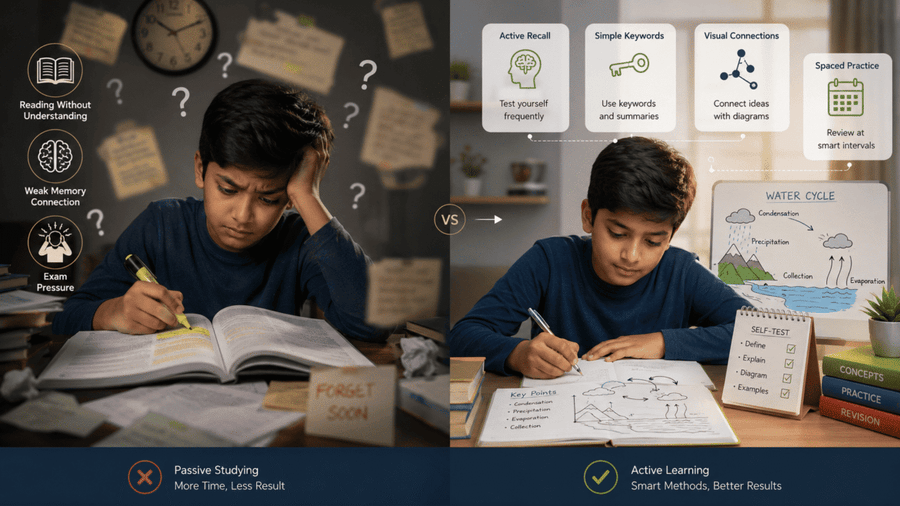
The child needs to take the information and break it down into words think of examples make a list of important keywords draw diagrams make up stories to help them remember ask themselves questions about it and practice writing it down.

That is how Children and their memory becomes strong when they use Children and their study time, in a way and really work on remembering the things they study like the Children do.

The Pressure Problem Nobody Talks About

kids are not weak they are just really overwhelmed.

They have a lot on their minds.

Parents compare them to kids.

Teachers expect them to do well.

Relatives always ask about their grades.

Classmates try to compete with them.

Exams are really scary.

The child starts studying. Not because they want to learn they just do not want to fail.

This makes them feel stressed.

When they are stressed they forget things.

A kid might know the answer when they are at home. When they are in the exam hall they just forget because they are too scared.

The brain does not work well when it is scared.

So when a kid does not do well on a test getting angry is not always the answer.

Sometimes the kid needs someone to talk to them calmly they need someone to support them emotionally. They need a better routine for studying.

The Pressure Problem is a deal, for kids and it is something that The Pressure Problem is always causing trouble for them.

The kid is dealing with The Pressure Problem and The Pressure Problem is not easy to solve.

The Real Reason Your Child Scores Less

The real reason your child scores less is usually not that your child does not study all.

Your child is actually studying.

The real reason is that your child is studying in a way that does not match how your childs memory works.

Your child is putting in a lot of effort when they study.

For some reason this effort is not getting turned into good marks.

Your child is reading all the material. They are not able to recall it when they need to.

They are trying to memorize things. They are not really understanding what they are memorizing.

Your child is revising their notes and all. They are not testing themselves to see if they really know the stuff.

They are spending a lot of time studying. They are not building confidence, in what they know.

That is why the result of all their hard work does not match the amount of time your child is putting in and that is why your child scores less.

What Parents Can Do

Instead of just asking, “How many hours did your child study?” ask more helpful questions.

Ask your child:

  • “Can you tell me about this topic?”
  • “Can you write down the answer on your own?”
  • “What are the main points here?”
  • “Can you give me an example of this?”
  • “Can you think of a story or picture that explains this?”
  • “Can you teach this to someone else like a sibling?”

When your child teaches someone else a topic they understand it better.

When they write down answers they feel more confident about their exams.

When they connect topics to stories, examples and pictures they remember them for a time.

When they go over questions they get ready, for the exam.

This is how studying becomes more effective and leads to results.

The Smart Study Formula

A good study routine should work like this:

  • Read a topic once to get the idea.
  • Then try to explain it in words.
  • Next make a list of keywords or key points.
  • After that close the book. Try to recall what you read.
  • Write down the answer one time.
  • Finally revise it after a while.

This method may seem easy. It really works.

Because now you are not just reading.

You are teaching your brain to remember things put them in order and express them well.

That is exactly what exams require.

Marks Improve When Learning Becomes Meaningful

Kids do not need to dislike studies.

They need to feel successful in their studies.

When they start remembering things they feel more confident.

When they become more confident they join in more.

When they join in more they get a grasp of things.

When they get a grasp of things their marks get better.

This all starts when we stop blaming the child and start making changes to the way they learn.

Because many kids are not failing because they are not trying hard enough.

They are struggling because nobody showed them how to learn.

Final Thought

The kid who studies a lot but doesn’t do well is not always careless.

Sometimes that kid is really confused.

Sometimes they are. Using a wrong approach.

Sometimes they just memorize things without getting it.

Sometimes they are scared of letting everyone down.

Sometimes what they need is not more stress but the right way to learn.

So before saying, “You didn’t study right ” ask this:

“Did my kid learn in a way that their brain can actually recall?”

Because when the way they learn changes their results can change

The same kid who once forgot everything in the exam hall can become the kid who writes with confidence, clarity and better grades.

0 comment
0 FacebookTwitterPinterestEmail
SSC • Banking • Competitive Exams

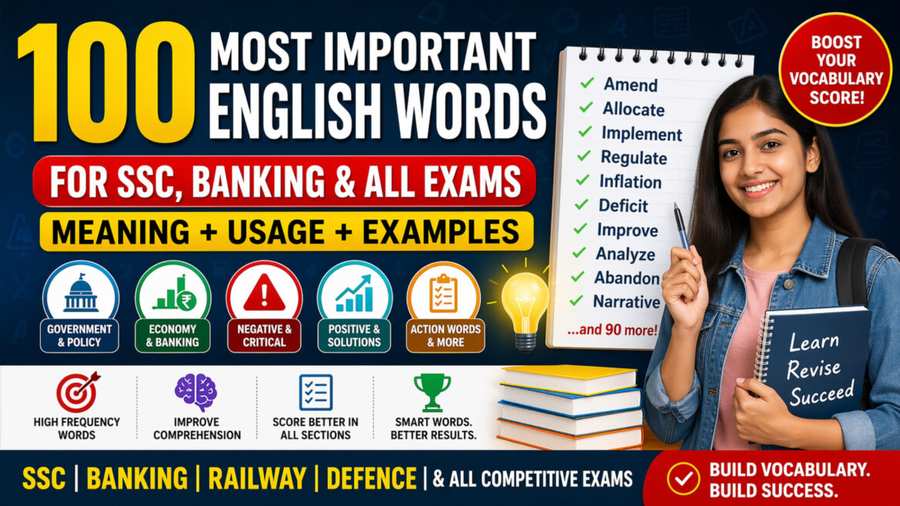
500 Most Important English Words for SSC, Banking & Exams (With Meaning + Usage)

Build a stronger vocabulary for comprehension, cloze test, synonyms, antonyms, one word substitution, error detection, fill in the blanks, phrase replacement, and sentence improvement with this exam-focused word list.

Many students spend months studying grammar, mock tests, and comprehension, but still lose marks in questions based on:

  • One word substitution
  • Synonyms and antonyms
  • Cloze test
  • Reading comprehension
  • Error detection
  • Phrase replacement
  • Fill in the blanks
  • Sentence improvement

The reason is simple: their vocabulary is weak.

That is why learning the 100 most important English words for SSC, Banking & other competitive exams can be one of the smartest things you do for your preparation.

100 Important English Words for SSC, Banking & Other Competitive Exams

Category 1: Government / Policy / News

Very high frequency words that appear in editorials, policy passages, and comprehension sets.

1. Amend

Meaning: to change officially

Usage: The constitution was amended.

2. Allocate

Meaning: to assign resources

Usage: Funds were allocated for education.

3. Implement

Meaning: to put into action

Usage: The policy was implemented nationwide.

4. Regulate

Meaning: to control by rules

Usage: The government regulates banking systems.

5. Enforce

Meaning: to make laws effective

Usage: Police enforce traffic rules.

6. Repeal

Meaning: to cancel a law

Usage: The act was repealed.

7. Draft

Meaning: prepare document

Usage: A draft bill was presented.

8. Sanction

Meaning: approval OR penalty (important dual meaning)

Usage: The project got government sanction.

9. Subsidy

Meaning: financial support

Usage: Farmers received subsidies.

10. Initiative

Meaning: new plan

Usage: Government launched an initiative.

Category 2: Economy / Banking

Very important for IBPS, SBI, RBI, and economy-based reading passages.

11. Inflation

Meaning: rise in prices

Usage: Inflation affects purchasing power.

12. Deficit

Meaning: shortage

Usage: Fiscal deficit increased.

13. Revenue

Meaning: income

Usage: Tax revenue increased.

14. Expenditure

Meaning: spending

Usage: Government expenditure rose.

15. Liquidity

Meaning: cash availability

Usage: Banks need liquidity.

16. Credit

Meaning: loan facility

Usage: Credit growth is rising.

17. Debt

Meaning: borrowed money

Usage: The country has high debt.

18. Collapse

Meaning: sudden failure

Usage: The market collapsed.

19. Surge

Meaning: sudden increase

Usage: Demand saw a surge.

20. Decline

Meaning: decrease

Usage: Sales declined this quarter.

Category 3: Negative / Critical Tone

Very common in reading comprehension, editorial passages, and opinion-based English questions.

21. Criticize

Meaning: to find fault

Usage: The policy was criticized.

22. Condemn

Meaning: strongly criticize

Usage: Leaders condemned the act.

23. Allegation

Meaning: accusation without proof

Usage: Allegations were made.

24. Corruption

Meaning: dishonest practice

Usage: Corruption harms development.

25. Crisis

Meaning: serious problem

Usage: The country faced a crisis.

26. Threat

Meaning: danger

Usage: Pollution is a threat.

27. Conflict

Meaning: disagreement

Usage: Conflict delayed progress.

28. Dispute

Meaning: argument

Usage: Legal dispute arose.

29. Controversy

Meaning: public disagreement

Usage: The decision caused controversy.

30. Violation

Meaning: breaking rules

Usage: Human rights violation occurred.

Category 4: Positive / Solution Words

Useful in comprehension, sentence improvement, and tone-based vocabulary questions.

31. Improve

Meaning: make better

Usage: Conditions improved.

32. Enhance

Meaning: increase quality

Usage: Skills were enhanced.

33. Boost

Meaning: increase

Usage: Policy boosted economy.

34. Promote

Meaning: encourage

Usage: Government promotes education.

35. Develop

Meaning: grow

Usage: Infrastructure developed.

36. Achieve

Meaning: succeed

Usage: Goals were achieved.

37. Progress

Meaning: forward movement

Usage: The country made progress.

38. Efficient

Meaning: working well

Usage: System is efficient.

39. Sustainable

Meaning: long-lasting

Usage: Sustainable growth is needed.

40. Stable

Meaning: steady

Usage: Economy is stable.

Category 5: Common Exam Action Words

Words that often appear in instructions, reasoning, data interpretation, and English sections.

41. Analyze

Meaning: examine

Usage: Analyze the data.

42. Assess

Meaning: evaluate

Usage: Teachers assess students.

43. Interpret

Meaning: explain meaning

Usage: Interpret the passage.

44. Conclude

Meaning: finish/decide

Usage: We conclude that…

45. Indicate

Meaning: show

Usage: Data indicates growth.

46. Suggest

Meaning: propose

Usage: Report suggests changes.

47. Reveal

Meaning: show hidden truth

Usage: Study revealed facts.

48. Demonstrate

Meaning: prove

Usage: Results demonstrate success.

49. Identify

Meaning: recognize

Usage: Identify errors.

50. Compare

Meaning: find similarities

Usage: Compare both options.

Category 6: High-Frequency Advanced Words

SSC favorite words for vocabulary, one word substitution, and editorial-based questions.

51. Abandon

Meaning: to leave completely

Usage: He abandoned the plan.

52. Abolish

Meaning: to officially end

Usage: The old rule was abolished.

53. Abrupt

Meaning: sudden and unexpected

Usage: There was an abrupt change in policy.

54. Adverse

Meaning: unfavorable or harmful

Usage: The company faced adverse conditions.

55. Advocate

Meaning: to support publicly

Usage: Many experts advocate reform.

56. Alleviate

Meaning: to reduce pain or difficulty

Usage: The scheme may alleviate poverty.

57. Ambiguous

Meaning: unclear or having more than one meaning

Usage: The statement was ambiguous.

58. Arbitrary

Meaning: based on personal choice, not reason

Usage: The decision seemed arbitrary.

59. Benevolent

Meaning: kind and generous

Usage: He was known as a benevolent leader.

60. Coherent

Meaning: logical and clear

Usage: Her answer was clear and coherent.

61. Comprehensive

Meaning: complete and detailed

Usage: The report gives a comprehensive view.

62. Deteriorate

Meaning: to become worse

Usage: The situation continued to deteriorate.

63. Eliminate

Meaning: to remove completely

Usage: The new system will eliminate errors.

64. Emerge

Meaning: to come out or appear

Usage: New problems began to emerge.

65. Evident

Meaning: clearly seen or understood

Usage: His disappointment was evident.

66. Feasible

Meaning: possible and practical

Usage: The plan is feasible.

67. Inevitable

Meaning: certain to happen

Usage: Change is inevitable.

68. Justify

Meaning: to show to be right

Usage: The facts justify the decision.

69. Legitimate

Meaning: lawful or valid

Usage: It was a legitimate concern.

70. Mitigate

Meaning: to make less severe

Usage: Steps were taken to mitigate damage.

Category 7: Common Editorial Words

Frequently seen in newspaper passages, editorials, and exam comprehension sets.

71. Narrative

Meaning: a spoken or written account

Usage: The article presents a clear narrative.

72. Perspective

Meaning: a particular point of view

Usage: We need a broader perspective.

73. Trend

Meaning: a general direction of change

Usage: This trend is worrying.

74. Impact

Meaning: strong effect or influence

Usage: The policy had a positive impact.

75. Consequence

Meaning: result or effect

Usage: Every action has a consequence.

76. Factor

Meaning: an element that influences something

Usage: Cost is an important factor.

77. Issue

Meaning: an important subject or problem

Usage: Climate change is a major issue.

78. Approach

Meaning: a method of doing something

Usage: The government adopted a new approach.

79. Strategy

Meaning: a planned method to achieve something

Usage: The team changed its strategy.

80. Framework

Meaning: a basic structure or system

Usage: The law provides a clear framework.

Category 8: Daily Use + Exam Mix

Common words that are simple but very useful in tests and reading passages.

81. Attempt

Meaning: to try

Usage: She attempted all the questions.

82. Avoid

Meaning: to stay away from

Usage: Avoid careless mistakes.

83. Continue

Meaning: to keep going

Usage: The classes will continue next week.

84. Create

Meaning: to make

Usage: The new rule may create problems.

85. Decide

Meaning: to make a choice

Usage: The board will decide tomorrow.

86. Explain

Meaning: to make clear

Usage: Please explain your answer.

87. Improve

Meaning: to make better

Usage: Practice will improve your score.

88. Maintain

Meaning: to keep in the same condition

Usage: It is hard to maintain quality.

89. Reduce

Meaning: to make less

Usage: The medicine helps reduce pain.

90. Support

Meaning: to help or back up

Usage: Parents should support students.

Category 9: Important Connecting Words

Very important in cloze test, sentence arrangement, and comprehension flow.

91. However

Meaning: in contrast / but

Usage: The plan was good; however, it failed.

92. Therefore

Meaning: for that reason

Usage: He worked hard; therefore, he succeeded.

93. Moreover

Meaning: in addition

Usage: The course is affordable; moreover, it is effective.

94. Although

Meaning: even though

Usage: Although he was tired, he continued.

95. Despite

Meaning: in spite of

Usage: Despite the rain, the match continued.

96. Whereas

Meaning: while on the other hand

Usage: She likes tea, whereas I prefer coffee.

97. Hence

Meaning: for this reason

Usage: The roads were blocked; hence, we were late.

98. Thus

Meaning: so / as a result

Usage: He practiced daily, thus improving his speed.

99. Meanwhile

Meaning: at the same time

Usage: She prepared the notes; meanwhile, I revised the chapter.

100. Consequently

Meaning: as a result

Usage: He ignored the warning; consequently, he failed.

Best Sources for Important Exam Vocabulary

If you want to build strong exam vocabulary, focus on:

  • previous year SSC papers
  • previous year Banking papers
  • newspaper editorials
  • quality vocabulary lists
  • exam-focused reading passages
  • regular mock test practice
Do not depend only on random social media word lists. Many of them are not useful for real exams.

Common Mistakes Students Make While Learning Vocabulary

Memorizing without context — A word without a sentence is hard to retain.

Learning too many words at once — This causes overload and poor revision.

Not revising — Most forgetting happens because students move ahead without revision.

Ignoring usage — Many students know the Hindi meaning but cannot identify the correct usage.

Avoiding reading practice — Vocabulary improves fastest when you read good English daily.

Why 100 Important Words Can Be a Game Changer

You do not need perfect English to score well in competitive exams.

You need smart preparation.

A carefully selected list of 100 important English words can help you:

  • answer vocabulary questions better
  • improve comprehension speed
  • understand editorials more easily
  • perform better in mock tests
  • gain confidence in the English section

For many aspirants, this becomes the difference between an average score and a selection-worthy score.

Final Advice for SSC and Banking Aspirants

If you are serious about cracking exams, then start treating vocabulary as a daily scoring subject, not a side topic.

Even 15 minutes a day can create huge improvement over time.

Do not wait for the “perfect day” to start.

Start today.

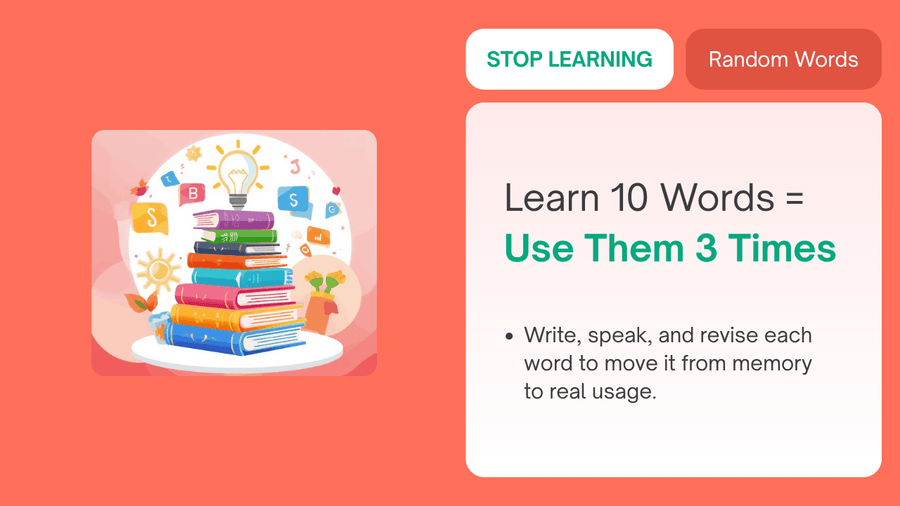
  • Learn 10 words.
  • Revise yesterday’s 10.
  • Use them in sentences.
  • Read one passage.
  • Repeat daily.

That is how exam English becomes easy.

Conclusion

The 500 most important English words for SSC, Banking & Exams are not just a word list—they are a scoring tool.

When learned with meaning + usage + revision, these words can strengthen your overall English preparation in a powerful way.

If you stay consistent, vocabulary will stop feeling like a weak area and start becoming one of your strengths.

So begin now, build your word bank step by step, and make English work in your favor in every exam.

FAQs

How many English words should I learn daily for SSC exams?

A good target is 10 to 15 words daily with revision.

Are 100 words enough for Banking and SSC exams?

They give you a very strong base, especially when combined with reading practice and mock tests.

Is vocabulary important for cloze test and comprehension?

Yes. Vocabulary is extremely important for both.

What is the best way to remember English words for exams?

Learn words with meaning, sentence usage, revision, and memory tricks.

Can I improve vocabulary without reading newspapers?

Yes, but newspapers and editorials make improvement much faster.

0 comment
0 FacebookTwitterPinterestEmail
Image illustrating strategies to enhance English vocabulary for competitive exams, featuring tips and resources

How to Improve English Vocabulary for Competitive Exams: 30 Powerful Ways That Actually Work

If you are searching for how to improve English vocabulary for competitive exams, you are not alone. Thousands of students preparing for SSC, Bank, CLAT, CAT, defence, and other exams struggle with the same issue: they study words today and forget them tomorrow. The good news is that vocabulary is not a talent. It is a skill, and skills can be built with the right system. That is exactly where a structured learning approach makes a big difference. DLC The Learning Club positions itself around English vocabulary, grammar, and exam-ready learning through its VOCABMETRY approach and digital learning platform, which makes this topic a natural fit for its audience.

Why English Vocabulary Matters in Competitive Exams

Vocabulary is not just one chapter inside the English section. It affects how you understand reading comprehension, sentence improvement, cloze tests, para jumbles, idioms, and even instructions. Exam-prep publishers regularly highlight vocabulary, comprehension, error spotting, and related English topics as core scoring areas across competitive exams. That means a better word bank can improve both speed and confidence.

Where vocabulary questions appear most often

In most competitive exams, vocabulary appears directly in:

  • synonyms and antonyms
  • one-word substitutions
  • idioms and phrases
  • cloze tests
  • fill in the blanks
  • reading comprehension

It also appears indirectly. A student may know grammar well, but if the words inside the options feel unfamiliar, accuracy drops. That is why vocabulary is not a side topic. It is a score multiplier.

Why vocabulary improves accuracy beyond the English section

A stronger vocabulary helps students read faster, guess less, and understand tone more clearly. In long passages, one unknown keyword can distort the meaning of an entire paragraph. In verbal reasoning and legal aptitude contexts too, language precision matters. For an institute like DLC The Learning Club, which already serves learners interested in language and competitive-exam readiness, vocabulary-focused content can attract students at the exact point where they are looking for help. That is an inference based on DLC’s course focus and the kinds of vocabulary articles regularly published by exam brands.

The Real Reason Students Forget New Words

Let’s be honest. Most students do not fail because they are lazy. They fail because they use weak methods.

They read a list.
They underline a few words.
They say, “I’ll revise later.”
And then—poof—the words are gone.

Passive learning vs active recall

Reading a word is passive. Remembering it without seeing the answer is active recall. The brain stores information better when it has to retrieve it. So, instead of reading “abate = reduce,” close the notebook and ask yourself, “What does abate mean?” That small change makes revision far more effective. Vocabulary resources for competitive exams often pair words with meanings, examples, and practice formats because recall improves when students use words in context, not when they only look at lists.

Why cramming fails before exams

Cramming creates the illusion of progress. A student may “recognize” 50 words tonight and forget 40 by next week. Long-term retention needs spaced revision. In plain words, you must come back to the same word after 1 day, 3 days, 7 days, and 15 days. That is how memory gets stronger. App-based and episode-based learning systems can support this kind of repetition more easily than random notebooks, which is one reason digital learning platforms often appeal to exam aspirants.

How to Improve English Vocabulary for Competitive Exams with a 30-Day Plan

Here comes the practical part. This plan is simple, realistic, and designed for busy students.

Week 1: Build the habit

Goal: Learn 10 words a day and revise them every night.

What to do:

  • Learn 5 words in the morning and 5 in the evening
  • Write meaning, synonym, antonym, and one sentence
  • Revise all 10 words before sleeping
  • Read one short editorial or article and underline new words

Do not aim for perfection in week 1. Aim for consistency. Even 70 words learned properly are better than 300 words skimmed badly.

Week 2: Learn by usage

Goal: Move from memory to application.

What to do:

  • Use 10 old words in self-made sentences
  • Solve 10 fill-in-the-blank questions daily
  • Group similar words together
  • Start learning roots, prefixes, and suffixes

This stage matters because vocabulary grows faster when words connect to other words. For example, once you know “bene” means good, words like benefit and benevolent become easier to remember.

English Vocabulary Tips For You!

English Vocabulary Tips For You!

Week 3: Practice in exam format

Goal: Train your brain to recognize words under pressure.

What to do:

  • Solve cloze tests
  • Practice reading comprehension
  • Attempt synonym-antonym quizzes
  • Set a timer for 15–20 minutes

Many students know words at home but freeze in mock tests. Why? Because they never trained with time pressure. Vocabulary must shift from “I know this word” to “I can use it quickly.”

Week 4: Revise for retention

Goal: Make your learning stick.

What to do:

  • Revise all words from weeks 1 to 3
  • Mark difficult words in red
  • Test yourself without notes
  • Create mini quizzes every day
  • Use tough words in conversation or writing

By the end of 30 days, the student who follows this system seriously will not just know more words. They will think more clearly in English.

10 Smart Techniques to Learn Words Faster

1. Learn root words

Root-based learning helps you decode unfamiliar words. One root can unlock many words.

2. Study prefixes and suffixes

Un-, dis-, pre-, anti-, -able, -tion, and -ment appear often. Learn them once and many words become easier.

3. Use synonyms and antonyms

A word becomes stronger in memory when it lives inside a word family.

4. Make your own sentence

A self-made sentence is easier to remember than a dictionary sentence.

5. Use visual memory

Turn the word into a picture in your mind. It sounds silly, but it works.

6. Revise in short bursts

Ten focused minutes beat one sleepy hour.

7. Read aloud

Hearing the word improves retention and pronunciation.

8. Maintain a personal vocabulary journal

This becomes your revision goldmine.

9. Learn high-frequency words first

Do not chase fancy words before mastering common exam words.

10. Practice mixed question sets

Real exams mix vocabulary with grammar and comprehension, so your practice should too. These methods line up with broader competitive-exam advice that emphasizes reading, journaling, usage, flashcards, and repeated practice rather than one-time memorization.

Daily Habits That Make Vocabulary Stick

Read editorials and short articles

You do not need to read a whole newspaper from top to bottom. One quality article a day is enough. Focus on understanding context, tone, and repeated words. When a word appears naturally inside an article, your brain remembers it better than when it appears in a dry list.

Keep a vocabulary journal

Split each page into:

  • word
  • meaning
  • synonym
  • antonym
  • sentence
  • revision date

That last column is the secret sauce. Without revision dates, a notebook becomes a graveyard of forgotten effort.

Speak and write with new words

Use new words in WhatsApp drafts, diary entries, essays, or spoken English practice. Active usage turns a word from “familiar” into “owned.” Platforms that teach vocabulary through repeated content and guided lessons can help students create this habit more consistently, especially when learning through video or app-based modules.

Common Vocabulary Mistakes Competitive Exam Aspirants Make

Memorizing without context

A word without a sentence is weak. Context gives meaning life.

Ignoring revision

Students spend hours learning and minutes revising. That ratio should be reversed.

Studying rare words before useful ones

Common exam words give better returns than obscure words.

Depending only on PDFs

PDFs are useful, but they do not automatically create retention. You still need recall, revision, and testing.

Avoiding reading comprehension

Some students say, “I only want vocabulary, not RC.” That is like wanting muscles without exercise. RC forces vocabulary into action. Resources for exam aspirants repeatedly combine vocabulary with comprehension and usage for that reason.

Best Types of Vocabulary Questions to Practice

Cloze tests

These help you choose the right word based on sentence flow and tone.

Reading comprehension

This improves contextual guessing and reading speed.

Fill in the blanks

Excellent for learning collocations and sentence logic.

Synonyms and antonyms

Useful for direct vocabulary building.

Idioms and phrases

Very common in many competitive exams and easy to score with revision.

One-word substitutions

A favorite in many English sections because it tests both understanding and precision.

How DLC The Learning Club Can Help Students Learn Faster

DLC The Learning Club describes itself as an education platform focused on English vocabulary, grammar, and complicated topics, and highlights its VOCABMETRY process across its main website, app presence, and course pages. Its course messaging also points to vocabulary for competitive exams, while its Graphy page emphasizes episode-based learning. For students, that matters because structured repetition, guided lessons, and app-based access can make consistency much easier than unplanned self-study.

What makes this relevant for SEO is simple: the brand’s actual strengths match a real student pain point. That is the sweet spot for traffic content. A blog post on how to improve English vocabulary for competitive exams can bring in:

  • students searching for English improvement tips
  • aspirants preparing for exams
  • users looking for vocabulary courses or apps
  • parents comparing learning platforms

In other words, the topic can attract informational traffic at the top of the funnel and still lead naturally to DLC’s learning ecosystem. That is an inference from DLC’s positioning and the visible search landscape around vocabulary and exam prep.

A Sample 7-Day Vocabulary Routine

Day Task Time
Monday Learn 10 new words + revise 10 old words 30 min
Tuesday Read one article + note 5 new words 25 min
Wednesday Practice synonyms, antonyms, and fill in the blanks 30 min
Thursday Solve one cloze test + revise difficult words 30 min
Friday Use 15 words in sentences 25 min
Saturday Take a vocabulary mini-test 20 min
Sunday Full revision of the week 40 min

This simple routine beats random studying every single time.

25 High-Utility Words Students Should Know

Word Meaning Quick Use
Abate Become less The pain began to abate
Adept Skilled She is adept at analysis
Alleviate Reduce pain or trouble This may alleviate stress
Ambiguous Unclear The statement was ambiguous
Benevolent Kind A benevolent leader
Candid Honest Give a candid answer
Coherent Logical Write a coherent paragraph
Concise Brief and clear Keep your answer concise
Credible Believable Use credible sources
Diligent Hardworking A diligent student improves
Eloquent Fluent and persuasive An eloquent speaker
Frugal Careful with money A frugal lifestyle
Imminent About to happen Results are imminent
Lucid Easy to understand A lucid explanation
Meticulous Very careful Be meticulous in revision
Novice Beginner Every topper was once a novice
Omit Leave out Do not omit examples
Pragmatic Practical Take a pragmatic approach
Resilient Able to recover Be resilient after mock tests
Scrutinize Examine carefully Scrutinize every option
Sporadic Irregular Sporadic study gives weak results
Tenacious Persistent Be tenacious in preparation
Validate Confirm Validate your answer
Versatile Able to adapt A versatile vocabulary helps
Wary Careful or cautious Be wary of guesswork

FAQs

1. How many words should I learn daily for competitive exams?

A realistic target is 10 words a day with revision. That gives you 300 words in a month, which is far better than learning 50 words once and forgetting most of them.

2. What is the best way to remember difficult English words?

Use active recall, spaced revision, and self-made sentences. Words stay longer when you use them, not when they only read them.

3. Is reading newspapers enough to improve vocabulary?

Reading helps a lot, but reading alone is not enough. You also need revision, testing, and usage. Newspapers build exposure; practice builds retention.

4. Which is more important for exams: grammar or vocabulary?

Both matter, but vocabulary improves multiple areas at once, including comprehension, cloze tests, and direct word-based questions. Strong vocabulary often supports grammar-based performance too.

5. Can Hindi-medium students build strong English vocabulary?

Absolutely. Many students from Hindi-medium backgrounds improve quickly when they use a consistent system with meanings, examples, and regular revision. Recent exam-prep guidance explicitly says strong English scores are achievable for Hindi-medium aspirants with steady practice.

6. How long does it take to see improvement in English vocabulary?

Most students notice better recall and reading comfort within 3 to 4 weeks of structured practice. Strong long-term improvement usually takes a few months of consistency.

7. Can an app help in vocabulary preparation?

Yes, especially when it offers guided lessons, repeated exposure, and easy daily access. That is one reason learning apps and digital course platforms remain popular for exam preparation. DLC The Learning Club’s app and course ecosystem are built around this kind of structured access.

Conclusion

The answer to how to improve English vocabulary for competitive exams is not “study harder.” It is “study smarter.” Learn fewer words, but learn them properly. Revise on schedule. Read with attention. Practice with context. Test yourself often. And use a structured system that keeps you consistent.

0 comment
0 FacebookTwitterPinterestEmail
What-to-do-after-12th-exam

Private-sector careers and self-directed work paths after CBSE Class 12 in India:

Private-sector employment and self-employment/freelance paths that are realistically reachable after Class 12 (or within ~6–24 months via focused skilling) in India, with separate lenses for Science, Commerce and Humanities students are given below.

(Make sure you focus on – portfolio + certifications + internships/apprenticeships)


1. Web development / software development (portfolio-led; can freelance early; strong long-term upside).
2. Data analytics (Excel → SQL → Power BI) / entry-level BI (credential + project-driven; broad employer demand).
3. Digital marketing (SEO + ads + analytics) and social media operations (low cost-to-start; scales to agency/business).
4. Accounting/bookkeeping + GST/support operations (Tally + Excel) (particularly strong for Commerce; steady demand among SMEs).
5. Creative production for the content economy (graphic design + video editing) (portfolio-first; freelance-friendly; scalable via retainers).

Freelance income in month 1, or “standard” client rates cannot be specified precisely.


Key official programmes and platforms referenced (for skilling and access):

National Career Service (free career services and job listings), Skill India Digital Hub (access to skilling including Pradhan Mantri Kaushal Vikas Yojana guidelines), National Apprenticeship Promotion Scheme (NAPS-2 stipend support), and Prime Minister Internship Scheme (paid internships for eligible youth).

(You can take a look at this in the internet)


Learning platforms explicitly requested by the user:

Coursera, Udemy, NPTEL, and SWAYAM. SWAYAM courses are free to access; certificates require a paid proctored exam; NPTEL notes a proctored certification exam fee (commonly ₹1,000 per course on the NPTEL SWAYAM page).

(You can take a look at this in the internet)


Legal/age note (important for school-leavers):

Many school-leavers are 17–18. Indian law prohibits employment of children under 14 and prohibits adolescents (14–18) in hazardous occupations/processes. Always check age and role constraints before accepting field work, night shifts, or hazardous work.


Career options for Science stream:

Science students (PCM/PCB) can access all “cross-stream” digital careers plus some science-specific roles (allied healthcare, lab work, CAD/technical drafting, renewable energy technician work).


Science stream options and pathways –

Career option (private-sector + self-directed) Typical entry requirements after Class 12 Recommended short courses / certifications (official links) Estimated starting pay (India) 1 / 3 / 5-year growth prospects (typical) Typical employers / client types
Web developer / junior software developer (job or freelance) Any Science stream; strong fit for PCM; portfolio (2–4 projects) often substitutes for degree in small firms/start-ups https://www.freecodecamp.org/
https://www.theodinproject.com/
https://developer.mozilla.org/
~₹3.0–₹6.0 LPA typical entry band (varies); PayScale shows wide range and median ~₹4.12L for web developers 1y: junior dev + stronger portfolio; 3y: full-stack/dev specialising; 5y: senior/lead or product roles; upside strong if you move to product firms or specialise IT services, SaaS start-ups, agencies; freelance clients are SMEs needing websites, dashboards, automations
Data analyst / junior BI analyst (job or freelance dashboards) Any Science stream; Maths helps; requires Excel + SQL + BI tool; portfolio with 2–3 case studies Google Data Analytics: https://grow.google/certificates/data-analytics/
Power BI learning + credential (Microsoft): https://learn.microsoft.com/credentials/certifications/
Kaggle Learn: https://www.kaggle.com/learn
Entry-level data analyst pay on Indeed ₹35.6k/month (₹4.3 LPA); PayScale median for data analysts ~₹5.72L with wide distribution 1y: analyst with dashboards; 3y: senior analyst/BI; 5y: analytics lead/product analytics; demand supported by “data/AI” skill prioritisation in major job reports Analytics teams in most industries; agencies offering reporting; freelance clients: D2C brands, local service businesses
IT support → cloud foundations (job; later freelance consulting) Any Science stream; communication + troubleshooting + basics of networking; certs help CompTIA A+: https://www.comptia.org/certifications/a
AWS Cloud Practitioner: https://aws.amazon.com/certification/certified-cloud-practitioner/
Microsoft Azure Fundamentals: https://learn.microsoft.com/credentials/certifications/azure-fundamentals/
IT support averages vary; Indeed shows IT support specialist ~₹2.43L/year (entry roles), while PayScale for IT support specialist indicates a much wider band with higher ceilings 1y: L1/L2 support; 3y: sysadmin/cloud ops; 5y: cloud engineer/devops tracks; cloud pay can be materially higher as skills deepen IT services, BPO/ITeS support desks, managed service providers, start-ups
Entry cybersecurity track (junior security analyst) Any Science stream; strongest if you already have networking + Linux basics; portfolio via labs/CTFs Cisco CCNA: https://www.cisco.com/…/ccna/  foundational cloud (AWS/Azure links above); practice labs (free) PayScale median for cyber security analyst ~₹5.87L (wide range) 1y: SOC/analyst; 3y: security engineer; 5y: specialist (cloud security, appsec). Employer skill demand continues to cite cybersecurity/network skills as high-priority. SOCs, IT services security teams, banks/fintechs, consultancies
CAD drafter/designer (AutoCAD/SolidWorks) Typically PCM; spatial reasoning; portfolio of drawings; diploma helps but not always required for junior drafting CAD skill via structured courses; PayScale highlights AutoCAD/Revit as relevant skills on CAD drafter/designer CAD drafter median ~₹3.46L; entry-level compensation cited around ~₹2.32L on PayScale 1y: drafting speed + standards; 3y: BIM/revit, mechanical/civil specialisation; 5y: senior drafter/coordination roles Architecture/engineering firms, construction contractors, manufacturing vendors; freelance clients: architects, small contractors
Medical laboratory technician (private labs/hospitals) Usually PCB preferred; often requires recognised diploma/certification + practical training; compliance varies by state/employer (Detail varies by state; consult local allied health council/recognised institute). Salary benchmarks still useful to evaluate viability. PayScale median ~₹2.97L for medical laboratory technicians; Indeed lab technician ₹15,990/month (₹1.9L) 1y: supervised technician; 3y: senior tech/specialisation; 5y: lab supervisor tracks (often needs additional quals) Private diagnostic chains, hospitals, pathology labs
Medical coding (healthcare BPO/KPO) Any stream possible; science helps with terminology; certification improves credibility; strong English required (Certification bodies vary; not specified here due to multiple competing credentials.) For benchmarks: PayScale has medical coder and certified coder pay data. PayScale median ₹3.08L for medical coder; certified coder median higher (₹4.34L) 1y: entry coder; 3y: auditor/SME; 5y: team lead/quality; progression depends on accuracy + throughput Healthcare services firms, insurance back-offices, medical billing/coding vendors
Solar installer / technician (renewables) Science helpful; often field-based; safety training important; can use government skilling routes Skill pathways may be available via Skill India Digital/PMKVY infrastructure Indeed solar installer averages ₹33,018/month (₹4.0L); solar technician ~₹2.40L/year 1y: installation + maintenance competence; 3y: site supervisor; 5y: project technician roles; growth depends on local demand and safety record EPC contractors, rooftop solar firms, industrial maintenance vendors; potential self-employment via local contracting


Career options for Commerce stream –

Career option (private-sector + self-directed) Typical entry requirements after Class 12 Recommended short courses / certifications (official links) Estimated starting pay (India) 1 / 3 / 5-year growth prospects (typical) Typical employers / client types
Accounting assistant / junior accountant (job) Commerce preferred; Excel + basic accounting; some roles accept any stream with skill proof Tally Education: https://tallyeducation.com/tepl/
verify certificates: https://tallyeducation.com/tepl/certificate/
Junior accountant median ~₹2.26L (PayScale)  accountant salary distributions vary 1y: closing support + GST basics; 3y: accounts executive/senior accountant; 5y: finance operations lead in SMEs if strong compliance record SMEs, CA firms (private), retail chains, service companies
Bookkeeping (job or freelance for SMEs) Commerce preferred; accuracy + discipline; can start with small clients Tally + bookkeeping tools; consider MSME formalisation via Udyam if you scale Bookkeeper median ~₹2.51L on PayScale; Indeed ₹19.8k/month (₹2.37L) 1y: 2–5 clients; 3y: monthly retainers + payroll; 5y: small bookkeeping agency; scalability high with SOPs Micro/SMEs, freelancers, local shops, clinics
Sales / business development executive (job; can later freelance as lead-gen) Any stream; strong communication; resilience; often variable pay Communication + CRM familiarity; no single mandatory cert PayScale BDE median ~₹3.57L (plus incentives)  Indeed ~₹21k/month average 1y: target achievement; 3y: key accounts; 5y: sales manager; fast earnings growth if performance is strong BFSI, edtech, SaaS, real estate, agencies; clients are businesses or consumers depending on sector
Digital marketing executive (job or freelance) Any stream; commerce helpful for ROI thinking; portfolio of campaigns/landing pages Google Skillshop: https://skillshop.withgoogle.com/
HubSpot Academy: https://academy.hubspot.com/
Meta Blueprint: https://www.facebookblueprint.com/
Indeed digital marketing exec ~₹2.22L/year  PayScale marketing exec (digital skills) median ~₹3.60L 1y: execution + reporting; 3y: performance marketer; 5y: growth lead or agency owner; scalable via retainers Marketing agencies, D2C brands, local businesses, SMB exporters
Data analytics for business (Excel → Power BI) Commerce + strong Excel; projects focused on sales/finance dashboards SWAYAM/NPTEL (free learning, paid exam for cert): https://swayam.gov.in/
NPTEL details: https://swayam.gov.in/nc_details/NPTEL
Similar to data analyst roles: PayScale median ~₹5.72L; entry varies 1y: analyst support; 3y: BI analyst; 5y: analytics manager track if domain expertise strong Retail/CPG, fintech ops, supply chain, marketing analytics
Securities markets operations (NISM entry certificates) Commerce preferred; regulatory environment; roles may require specific certifications depending on function NISM certifications list: https://www.nism.ac.in/certifications/
NISM study material availability: https://api.nism.ac.in/cmp/
Starting pay varies widely by city/employer; not precisely specified due to role variability; treat as ops/BFSI pay bands similar to sales/ops roles initially 1y: operations/execution; 3y: dealer/ops lead; 5y: specialised compliance/research support (often needs graduation + experience) Brokerages, registrars, mutual fund distributors; client types include retail investors and institutions
Customer support / BPO operations (job) Any stream; English + process discipline; quickest time-to-entry Soft skills training via Skill India Digital where available PayScale CSR median ~₹3.37L  Indeed CSR ₹19.8k/month (₹2.37L) 1y: senior associate/QA; 3y: team lead; 5y: manager; stable but can plateau without upskilling ITeS/BPO providers, e-commerce support, banks’ call centres
e-Commerce operations (catalogue, seller ops, ads ops) Any stream; commerce helpful; needs Excel + marketplace familiarity Learning platforms + practical experience by managing a small store; no single mandatory cert Reliable “e-commerce exec” salary pages are inconsistent; Indeed e-commerce specialist ₹19.4k/month (₹2.3L)  PayScale eCommerce manager median ~₹5.49L (not entry-level) 1y: ops executive; 3y: marketplace lead; 5y: e-commerce manager or own D2C brand (highly variable) Marketplaces, D2C brands, agencies; client types are online sellers
Self-employment microbusiness (services or resale) Business basics + compliance; can formalise as MSME and seek credit Udyam registration official: https://udyamregistration.gov.in/
MUDRA offerings: https://www.mudra.org.in/offerings
Unspecified (depends on business model). Use conservative planning; initial months often volatile. 1y: validate unit economics; 3y: small team/agency/store; 5y: scalable if repeatable acquisition + operations Local consumers, SMEs, online buyers; depends on niche


Career options for Humanities stream –

Humanities students can perform exceptionally in careers where communication, writing, design sense, and understanding people are core advantages.


Humanities stream options and pathways-

Career option (private-sector + self-directed) Typical entry requirements after Class 12 Recommended short courses / certifications (official links) Estimated starting pay (India) 1 / 3 / 5-year growth prospects (typical) Typical employers / client types
Content writer / SEO content (job or freelance) Strong English + research ability; writing samples; niche focus (health/tech/finance) helps HubSpot certifications (content/marketing):
https://academy.hubspot.com/
SEO practice via real projects
PayScale content writer median ~₹3.39L 1y: consistent output + strategy; 3y: senior writer/content strategist; 5y: editorial lead or freelance studio; scalable via retainers Agencies, SaaS, media houses, D2C; freelance clients: founders, blogs, YouTubers
Digital marketing (SEO/ads/email) Any stream; humanities helpful for messaging; needs analytics literacy Google Skillshop:
https://skillshop.withgoogle.com/
Meta Blueprint:
https://www.facebookblueprint.com/
HubSpot Academy:
https://academy.hubspot.com/
Similar to marketing exec band: PayScale median ~₹3.60L  Indeed DME ~₹2.22L 1y: execution; 3y: performance manager; 5y: growth lead/agency; strong scalability with proof of ROI Agencies, SMBs, local services, D2C
Social media manager/community ops Portfolio (posts/calendar), basic analytics, community handling Meta Blueprint (training/certs):
https://www.facebookblueprint.com/
PayScale social media manager median ~₹3.58L  Indeed ₹20.7k/month (₹2.5L) 1y: consistent growth + reporting; 3y: brand/community lead; 5y: SMM agency or head of social for mid-size firm Brands, creators, agencies; clients: local/online brands needing distribution
Graphic designer (job or freelance) Portfolio (8–12 pieces), tool proficiency Practice + certs where useful; salary benchmarks: PayScale + Indeed PayScale graphic designer median ~₹3.60L  Indeed entry level graphic designer ~₹32,970/month 1y: junior designer; 3y: brand designer; 5y: art direction/lead or studio-owner track Agencies, startups, print/digital studios; freelance clients: SMEs, creators
Video editor / short-form content editor Portfolio (reels/shorts + one long video), storytelling Tool training + practice; salary data from PayScale PayScale video editor median ~₹4.27L 1y: specialist in shorts or YouTube; 3y: senior editor; 5y: post-production lead or freelance with retainers YouTubers/creators, agencies, brands, production houses
UX designer / UX writing (portfolio-first) Competitive; needs case studies (research→wireframe→testing). Degree helps but portfolio is decisive UX learning via structured programmes; PayScale provides India UX salary benchmarks PayScale UX designer median ~₹6.20L (wide range) 1y: junior UX; 3y: product designer; 5y: senior/lead; strong upside but lower entry probability without portfolio depth SaaS/product firms, agencies; freelance clients: startups needing MVP UX
HR assistant / recruiter Communication + coordination; Excel + ATS familiarity Use Skill India/NCS for entry-level opportunities
https://www.ncs.gov.in/
PayScale HR assistant median ~₹3.50L  recruiter median ~₹3.92L 1y: recruiter/HR ops; 3y: specialist recruiter; 5y: HRBP/recruiting lead (often needs further qualifications) Staffing firms, in-house HR teams, BPOs
Customer success / support (service roles) Communication + empathy + process; fastest to enter NCS listings and guidance
https://www.ncs.gov.in/
PayScale CSR median ~₹3.37L 1y: senior associate; 3y: team lead; 5y: operations manager; better if you move into customer success + analytics SaaS, BPOs, e-commerce
Event coordinator / event operations Organisation + vendor management; irregular hours Skill is experiential; pay benchmark from Indeed Indeed event coordinator ₹20.2k/month (₹2.4L) 1y: execute events; 3y: manage vendors/budgets; 5y: event manager or boutique firm Event agencies, corporate events, wedding planners


Cross-stream comparison and top recommended paths –

Path (works across streams unless noted) Cost-to-start Time-to-entry (typical) Starting earning potential (India) Scalability (long-run) Notes
Web development Low–Medium (laptop + optional paid courses) 4–9 months ~₹3–6 LPA common early band; wide distribution High Portfolio quality dominates; freelancing possible earlier with small sites
Data analytics (Excel→SQL→BI) Low–Medium 3–6 months Indeed entry-level ~₹4.3 LPA; PayScale median higher High Strong generalisability across industries; case studies essential
Digital marketing (SEO/ads/analytics) Low 2–4 months ~₹2.2–₹3.6 LPA benchmarks High Scales to retainers/agency; measurable outcomes build credibility
Accounting/bookkeeping + Tally (Commerce-leaning) Low–Medium 2–4 months ~₹2.2–₹3.5 LPA early benchmarks Medium–High Scales via retainers and standardised workflows; SME demand steady
Graphic design Low–Medium 3–6 months ~₹3–₹5 LPA typical starter band; varies Medium–High Scales as studio/retainership; portfolio is decisive
Video editing Low–Medium 2–6 months PayScale median ~₹4.27L; entry varies Medium–High Strong freelance market; retainers common; skill compounds via storytelling
IT support → cloud Medium (some cert exams paid) 3–6 months IT support early ~₹2.4L (Indeed) but grows with certs High Clear ladder to cloud/devops; certs can help signalling
Cybersecurity (entry SOC) Medium 6–12 months PayScale median ~₹5.87L; entry varies High More competitive; labs/portfolio important; demand signal strong
Sales / business development Low 0–2 months PayScale median ~₹3.57L + incentives Medium Fastest route to income; growth depends on performance; burnout risk
Customer support/BPO Low 0–1 month PayScale median ~₹3.37L; Indeed ~₹2.37L Medium Stable but may plateau; upskill into QA/ops/analytics
CAD drafting (Science-leaning) Medium 3–6 months CAD drafter median ~₹3.46L; entry ~₹2.32L Medium Better with BIM/specialisation; portfolio and standards matter
Solar installation/technician Medium (tools + safety) 1–4 months Solar installer ~₹33k/month; technician ~₹2.4L/yr Medium Field work; scales via contracting, but local demand dependent


A simple decision flow for choosing a path –

Finished Class 12
↓
Need income within 0-2 months?
Yes ↓
Customer Support / Sales / Entry Ops
No ↓
Prefer desk-based digital work?
Yes ↓
Pick 1 core skill: Web Dev / Data / Marketing / Accounts / Design
No ↓
Pick field/technical: Solar / CAD / Allied Health
↓
Build portfolio + 1 credible cert
Training + safety + supervised experience
↓
Internship / apprenticeship / freelance pilot
↓
First job + iterate skills 6-12 months


Career-after-12th-Cbse


Self-study resources and portfolio building:

High-leverage free resources (cross-stream)
freeCodeCamp for structured coding curricula and projects.
MDN Web Docs for HTML/CSS/JavaScript reference and learning pathways.
The Odin Project for project-based full-stack learning.
Kaggle Learn for fast, practical introductions (Python, pandas, data viz).
GitHub for showcasing code, version control habits, and public proof of work (a de-facto expectation in many tech hiring funnels).


Credible certification “anchors” (official sources):


Portfolio/project ideas by top path (what to build):

Web development

  • A responsive portfolio site + blog (SEO-ready).
  • A CRUD app with authentication (e.g., student notes, inventory).
  • A small business website with lead form + analytics tags.
  • A “real client” micro-project (even free/low-cost) with a case study.

Data analytics

  • Excel dashboard: admissions/career planning dataset (cleaning + pivots + charts).
  • SQL mini-project: design simple schema + write 20 queries and insights.
  • Power BI dashboard using public data (e.g., sales, operations).
  • A written “insights report” (executive summary + methodology + visuals).

Digital marketing

  • Create a landing page + run a small test campaign budget (if feasible) or simulate with mock data.
  • SEO audit + content brief + before/after improvements on a sample site.
  • Build a reporting template (Looker Studio/Excel) and annotate it.

Accounting/bookkeeping

  • Set up sample books for a mock SME: chart of accounts, monthly close checklist.
  • GST workflow simulation: invoice→ledger→reconciliation checklist (do not file unless authorised).
  • SOP document: “How I do monthly bookkeeping” + controls.

Design/video

  • 10-piece brand kit: logo, typography, social grid, posters, thumbnails.
  • 10 short-form edits (15–45s) with varied hooks and subtitles.
  • 1–2 long-form edits (4–10 min) demonstrating pacing and story structure.
  • Case studies: problem → constraints → iterations → final output.


Central government and national-level recruitments after 12th:

Comparison tables for major routes –

Route (example role/exam) Conducting body / employer Minimum education (stream notes) Age (as per current notices) Key selection stages Pay / pay level (indicative) Typical application window / cycle
NDA (Officer entry to Army/Navy/Air Force) Union Public Service Commission Army Wing: 12th pass; Air Force & Naval Wings: 12th with Physics & Maths Notification-based (strict DOB band). Example: NDA I 2025 used DOB bands in notice Written exam + SSB + medical + merit-based academy allocation Officer pay is per service rules (post-commission); varies by rank/cadre Typically twice a year; dates per UPSC calendar/notice
Agniveer (Navy) – Agniveer (SSR) Indian Navy 10+2 with Maths & Physics (min marks specified); diploma/vocational alternatives exist 17½–21 (batch-wise DOB bands in advt) INET (CBT) → Stage II (PFT + written + medical) → merit Pay package starts ₹30,000/month with defined in-hand share; “Seva Nidhi” corpus; no pension/gratuity; life insurance stated Batch cycles; dates and stages published per advertisement
Agniveer (Air Force) – Agniveervayu Indian Air Force Intermediate/10+2 with Maths & Physics & English (as per notification/handbook) Age bands per intake (e.g., Agniveervayu 01/2026 notice) Online test + Phase-II (physical, adaptation, medical etc. as notified) Pay/benefits per Agnipath/Agniveervayu terms (official handbook) Intake-based; apply online per CASB portal timelines
Agniveer (Army) (category varies by ARO/rally) Indian Army Varies by trade/category; technical entries typically require 10+2 Science with PCM + English and minimum aggregate marks 17½–21 (commonly notified), subject to notification Online CEE / physical / medical / document verification as per scheme Pay/benefits per Agnipath terms; varies by service notification Rally/ARO notification based (region-wise)
Coast Guard – Navik (GD) Indian Coast Guard 10+2 (typically with subject conditions as notified) 18–22 (with relaxation for SC/ST & OBC where applicable) Written/CBT + PFT + medical + DV (as per recruitment cycle) Pay/allowances per Coast Guard rules and appointment type Recruitment cycle per ICG portal
Constable (GD) in CAPFs + SSF + Rifleman (GD) in AR + Sepoy in NCB Staff Selection Commission + Ministry of Home Affairs Matriculation typically (12th pass is eligible but not required in this notice) 18–23 as on 01-01-2026 (for the 2026 cycle in the notice) CBE → PST/PET → medical (DME/RME) → DV; force allocation by merit + preferences Pay Level-3 (₹21,700–69,100) stated Online applications 01-12-2025 to 31-12-2025; CBT Feb–Apr 2026 (tentative)
Railways NTPC (Undergraduate/10+2): Commercial cum Ticket Clerk, Accounts/Junior Clerk cum Typist, Trains Clerk Railway Recruitment Boards (for Indian Railways) 12th pass (+ typing for typist posts as per parameters) 18–30 as on 01-01-2026 (CEN 07/2025) CBT/CBTST (typing as applicable) → DV → medical Pay Level-2/3 with initial pay ₹19,900/₹21,700 (post-wise) Opened 28-10-2025; closed 27-11-2025; timelines in CEN
Railways Level-1 (Group D equivalent): various posts in Level-1 Railway Recruitment Boards / Indian Railways As per detailed CEN (often 10th/ITI/equivalent; confirm per CEN) 18–33 stated in CEN 09/2025 document CBT → PET (where applicable) → DV → medical Initial pay ₹18,000 (Level-1) stated Indicative notice 27-12-2025; detailed CEN published 31-01-2026 per corrigenda/document
SSC CHSL (Group C clerical/DEO family) Staff Selection Commission 10+2 (DEO may have subject conditions in some posts) 18–27 as on 01-01-2026 (CHSL 2025 notice) with category relaxations listed Tier-I CBT → Tier-II CBT; skill/typing as applicable by post Pay levels vary by post (7th CPC); all-India service liability stated Calendar: Advt 23-06-2025; Tier-1 in Sep 2025
India Post GDS (BPM/ABPM/Dak Sevak) India Post (Department of Posts) Minimum typically 10th pass with Maths/English + local language; 12th pass is eligible Age and relaxations per schedule/notification Merit based on marks (no written exam in GDS engagement) + DV GDS is not a regular “pay matrix” post; allowances/rules as per GDS framework; service conditions documented Schedule-I (Jan-2026): registrations 31-01-2026 to 14-02-2026; applications 02-02-2026 to 16-02-2026; edit 18–19-02-2026
Banking clerical/PO via IBPS (note on eligibility) Institute of Banking Personnel Selection Graduation required (so not a 12th-only path) Age bands typically 20–28 for clerical CRP (varies each year) Prelims + main + allotment (per IBPS CRP) Bank pay scales per bipartite settlements/IBPS participating banks Annual IBPS CRP cycle; check IBPS notices


State-level recruitments in major states –

State Key recruitment portals to track Common 12th-pass-friendly categories (examples; verify notification) Notes on variation
Uttar Pradesh Uttar Pradesh Police Recruitment & Promotion Board; Uttar Pradesh Subordinate Services Selection Commission Police constable, fireman, jail warder; Group-C clerical/assistant posts where “Intermediate” is minimum UPSSSC often runs multiple post-wise recruitments; some require additional qualifying tests/typing; check each advt.
Maharashtra Maharashtra Police; Maharashtra Public Service Commission Police constable and allied uniformed posts; some state services via MPSC (often graduate-level) Maharashtra Police explicitly points applicants to an online application site for police recruitment cycles; MPSC is mainly graduate-level, so 12th-only candidates should prioritise police/other boards.
Tamil Nadu Tamil Nadu Uniformed Services Recruitment Board; Tamil Nadu Public Service Commission Police constable/jail warden/fire & rescue; Group IV services (10th minimum; open to 12th pass) TNUSRB publishes age limits and post-wise notices; TNPSC Group IV is SSLC-based in the notification, so 12th pass qualifies but the minimum is lower.
Karnataka Karnataka State Police; Karnataka Public Service Commission Police constable; forest guard (often via state dept/boards); departmental posts where PUC is minimum Karnataka police recruitments frequently run on dedicated portals; verify educational/physical standards per notification.
West Bengal West Bengal Police; West Bengal Police Recruitment Board; Public Service Commission, West Bengal Constable/lady constable, rifleman, warder, and other uniformed posts; PSC recruitments (many graduate-level, but some lower-level posts exist in some cycles) WBPRB/Police pages list recruitment notices and admit cards; PSC site is separate for state civil posts.
Bihar Central Selection Board of Constable; Bihar Staff Selection Commission Police constable/prohibition constable/jail warder (cycle-dependent); “inter-level” clerical/assistant posts (when notified) CSBC is the key portal for constable-type recruitments; BSSC runs non-uniformed recruitments and notices.


I want to prepare for the government exam – Click Here


0 comment
0 FacebookTwitterPinterestEmail

Jee Advanced 2026 Exam Date Announced:

The schedule for the Joint Entrance Examination (Advanced) 2026 has been officially released by Indian Institute of Technology Roorkee. According to the announcement, the exam will take place on Sunday, May 17, 2026. The test will be conducted in Computer Based Test (CBT) mode at designated examination centres across the country.

The Joint Entrance Examination Advanced is considered one of the toughest entrance examinations in India. Each year, only the highest-scoring candidates from the Joint Entrance Examination Main qualify to appear for this stage of the exam.

Clearing the examination allows students to seek admission to several undergraduate programmes offered by the Indian Institutes of Technology. These programmes include Bachelor of Technology (BTech), Bachelor of Science (BS), dual degree options such as BTech–MTech, as well as integrated science and engineering courses.

Since the exam is conducted in CBT format, candidates will answer all questions directly on computers provided at their assigned examination centres. This format helps maintain a consistent and standardised testing process across the country.

Jee Advanced Exam Schedule:

As per the official timetable, the examination will consist of two compulsory papers held on the same day. Both papers will cover Physics, Chemistry, and Mathematics, and candidates must appear for both sessions.

Paper 1: 09:00 AM – 12:00 PM (IST)
Paper 2: 02:30 PM – 05:30 PM (IST)

The two-paper structure is designed not only to assess conceptual understanding but also to measure analytical thinking and problem-solving abilities. The entire exam will continue to be conducted on computers as part of the broader shift toward digital examination formats in national entrance tests.

Students preparing for the exam are encouraged to regularly check the official website for the latest updates and notifications regarding JEE Advanced 2026.

How to prepare for the examination.

0 comment
0 FacebookTwitterPinterestEmail
CBSE-Physics-Practice-Paper

(Board Pattern)

Time: 3 Hours
Maximum Marks: 70


SECTION A

(1 × 20 = 20 Marks)

Attempt all questions.

1. The SI unit of electric flux is:

(a) N/C

(b) Nm²/C

(c) C/N

(d) Nm


2. A capacitor of capacitance C is connected to a battery. If the distance between plates is doubled, the capacitance becomes:

(a) C

(b) 2C

(c) C/2

(d) 4C


3. Drift velocity of electrons is directly proportional to:

(a) Temperature

(b) Electric field

(c) Resistance

(d) Length of conductor


4. The magnetic field at the center of a circular loop carrying current is proportional to:

(a) I

(b) 1/R

(c) IR

(d) I/R


5. Lenz’s law is based on conservation of:

(a) Charge

(b) Energy

(c) Momentum

(d) Mass


6. RMS value of AC is equal to:

(a) V₀

(b) V₀/2

(c) V₀/√2

(d) √2V₀


7. In an ideal transformer:

(a) Output power > Input power

(b) Output power = Input power

(c) Output power < Input power

(d) Depends on load


8. The energy of a photon is given by:

(a) hλ

(b) hc/λ

(c) λ/h

(d) h/λ


9. In Young’s double slit experiment, fringe width depends on:

(a) Wavelength

(b) Distance between slits

(c) Distance to screen

(d) All of these


10. The refractive index of a medium is maximum for:

(a) Red

(b) Yellow

(c) Green

(d) Violet


11. Half-life of a radioactive substance depends on:

(a) Initial amount

(b) Temperature

(c) Pressure

(d) Decay constant


12. In forward bias of p-n junction:

(a) Depletion region widens

(b) Depletion region narrows

(c) No change

(d) Junction breaks


13. The binding energy per nucleon is maximum for:

(a) Hydrogen

(b) Iron

(c) Uranium

(d) Helium


14. In photoelectric effect, stopping potential depends on:

(a) Intensity

(b) Frequency

(c) Distance

(d) Area


15. If resistance increases with temperature, it is:

(a) Semiconductor

(b) Electrolyte

(c) Metal

(d) Insulator


16. The direction of magnetic field due to current is given by:

(a) Fleming’s Left Hand Rule

(b) Fleming’s Right Hand Rule

(c) Right Hand Thumb Rule

(d) Lenz’s Law


17. The focal length of convex mirror is always:

(a) Positive

(b) Negative

(c) Zero

(d) Infinite


18. In a series LCR circuit at resonance:

(a) XL > XC

(b) XL < XC

(c) XL = XC

(d) R = 0


19. The SI unit of magnetic flux is:

(a) Tesla

(b) Weber

(c) Henry

(d) Ampere


20. The work function is minimum for:

(a) Metal

(b) Insulator

(c) Semiconductor

(d) Gas


SECTION B

(2 × 7 = 14 Marks)

  1. State Gauss’s Law.
  2. Define electric dipole moment. Write its SI unit.
  3. Derive relation between current and drift velocity.
  4. Define magnetic dipole moment of a current loop.
  5. What is self-induction? Write expression for self-induced emf.
  6. State Huygens’ Principle.
  7. Define half-life. Derive relation between half-life and decay constant.

SECTION C

(3 × 7 = 21 Marks)

  1. Derive expression for capacitance of parallel plate capacitor.
  2. Obtain expression for magnetic field at center of circular loop.
  3. Explain working of AC generator with diagram.
  4. Derive mirror formula using ray diagram.
  5. Explain Einstein’s photoelectric equation.
  6. Explain Bohr’s postulates of hydrogen atom.
  7. Draw V-I characteristics of p-n junction diode and explain.

SECTION D (Case Study)

(4 × 1 = 4 Marks)

A student performs Young’s Double Slit Experiment using light of wavelength 600 nm.
The slit separation is 0.3 mm and screen distance is 1.5 m.

  1. Write formula of fringe width.
  2. Calculate fringe width.
  3. What happens if wavelength increases?
  4. Name the type of interference.

SECTION E

(5 × 2 = 10 Marks)

  1. Derive expression for electric field due to infinite line charge.
  2. Explain cyclotron with diagram and derive expression for cyclotron frequency.

SECTION F

(5 × 1 = 5 Marks)

  1. Derive expression for de Broglie wavelength.


I want answers of the following questions


0 comment
0 FacebookTwitterPinterestEmail
rssb 1100 vacancy

RSSB Agriculture Supervisor Recruitment 2025-26: Apply Online for 1100 Posts Before 11 February 2026

The Rajasthan Staff Selection Board (RSSB) has issued the official notification for the Agriculture Supervisor Recruitment 2025-26 to fill 1,100 posts of Krishi Paryavekshak. The online application process is currently active and will close on 11 February 2026. Interested candidates must submit their applications through the official website before the deadline.

Final Reminder: Last Date to Apply Today

Today is the final day to apply for RSSB Agriculture Supervisor Recruitment 2025-26. Candidates can complete the online application process only until 11 February 2026 (up to 23:59 hours).

This recruitment drive is being conducted to appoint 1100 Agriculture Supervisors under the Rajasthan Agriculture Department. No applications will be accepted after the deadline, so eligible candidates are strongly advised to apply immediately.


Rajasthan Agriculture Supervisor Recruitment 2025-26 Notification PDF

The detailed notification for Agriculture Supervisor Recruitment 2025-26 has been officially released by RSMSSB. The complete notification PDF is available on the official website and includes comprehensive details such as:

  • Eligibility criteria
  • Vacancy distribution
  • Reservation rules
  • Exam pattern
  • Salary structure

Candidates can download the official RSSB Agriculture Supervisor Notification 2026 PDF from the board’s website for complete information.

PDF Link


RSSB Agriculture Supervisor Exam Date 2026 Announced

RSSB has officially declared the exam schedule for multiple recruitments, including Agriculture Supervisor, through a notification on its website (rsmssb.rajasthan.gov.in).

Exam Date: 18 April 2026 (Saturday)

Applicants should begin their preparations accordingly.


Rajasthan Agriculture Supervisor Recruitment 2025-26: Important Dates

  • Application Start Date: 13 January 2026
  • Last Date to Apply: 11 February 2026 (up to 23:59 hours)
  • Exam Date: 18 April 2026 (Tentative)
  • Admit Card: Will be released online via the Recruitment Portal/SSO (no physical admit cards will be issued)

Rajasthan Agriculture Supervisor Vacancy 2026

A total of 1100 vacancies have been announced for the Agriculture Supervisor post. These vacancies are divided between Scheduled and Non-Scheduled areas of Rajasthan as follows:

Area Vacancies
Non-Scheduled Areas 944
Scheduled Areas 156
Total 1100

RSSB Agriculture Supervisor Recruitment 2026: Overview

  • Organization: Rajasthan Staff Selection Board (RSMSSB), Jaipur
  • Advertisement No.: 01/2025
  • Post Name: Krishi Paryavekshak (Agriculture Supervisor)
  • Department: Agriculture Department
  • Total Vacancies: 1100 (944 Non-Scheduled, 156 Scheduled)
  • Job Location: Rajasthan
  • Age Limit: 18 to 40 years (as on 01.01.2026)
  • Application Period: 13 January 2026 to 11 February 2026 (up to 23:59 hours)
  • Exam Date: 18 April 2026 (Saturday)
  • Pay Scale: Pay Matrix Level-6
  • Application Fee: To be announced separately
  • Official Website: rsmssb.rajasthan.gov.in

Rajasthan Agriculture Supervisor Application Form 2026

The application window will close today at 23:59 hours (11 February 2026). Candidates who have not yet applied must complete their registration through the official portal before the link is deactivated.

Ensure that:

  • All required documents are ready
  • Eligibility conditions are fulfilled
  • Application details are correctly filled

The post offers Pay Matrix Level-6 along with state government benefits.


RSSB Agriculture Application Fees 2026

Applicants must pay a one-time registration (OTR) fee via the SSO portal.

Category-wise Application Fee

Category Fee
General / Creamy Layer OBC / MBC Rs.600
Non-Creamy Layer OBC / MBC (Rajasthan) Rs.400
EWS (Rajasthan) Rs.400
SC/ST (Rajasthan) Rs.400
Persons with Disabilities (Divyangjan) Rs.400

RSSB Agriculture Supervisor Eligibility Criteria 2026

Educational Qualification

Applicants must have:

  • B.Sc. (Agriculture) or B.Sc. (Horticulture) (Honours) from a recognized university

OR

  • Senior Secondary (10+2) with Agriculture as a subject from a recognized board

Additionally, candidates must have:

  • Working knowledge of Hindi written in Devanagari script
  • Understanding of Rajasthan’s culture

Final-year students are eligible to apply but must obtain the required qualification before the exam date.


Age Limit

Category Minimum Age Maximum Age
General (Male) 18 years 40 years
SC/ST/OBC/EWS (Male, Rajasthan Domicile) 18 years 45 years
General (Female) 18 years 45 years
SC/ST/OBC/EWS (Female, Rajasthan Domicile) 18 years 50 years

Special Provision: Since no recruitment was conducted for this post in previous years, an additional age relaxation of 2 years has been granted to all applicants.


RSSB Agriculture Supervisor Exam Pattern 2026

The examination will be conducted in offline mode (OMR-based) and will consist of objective-type multiple-choice questions.

  • Each correct answer: 3 marks
  • Negative marking: 1 mark deducted for every incorrect answer
  • Duration: 2 hours

Subject-wise Distribution

Subject Questions Marks
General Knowledge 15 45
Rajasthan GK (History & Culture) 25 75
Agronomy 20 60
Horticulture 20 60
Animal Husbandry 20 60
Total 100 300

RSSB Agriculture Supervisor Salary 2026

The salary structure for the Agriculture Supervisor post falls under the 7th Pay Commission.

  • Pay Scale: Rs.29,200 – Rs.92,300
  • Grade Pay: Rs.2,800
  • Pay Matrix Level: Level-5

During the probation period, candidates will receive a fixed monthly salary as determined by the Rajasthan Government. After successful completion of probation, the regular pay scale along with allowances and other benefits will be applicable.

0 comment
0 FacebookTwitterPinterestEmail
UPSC 2026 Exam Schedule

The Union Public Service Commission has officially released the UPSC Calendar 2026. Candidates preparing for UPSC examinations can download the UPSC Calendar 2026 PDF to stay informed about important announcements, examination timelines, and key deadlines.

The UPSC Calendar provides tentative dates for notifications, application submissions, and exam schedules. The UPSC Calendar 2026, released on 15th May 2025, includes major examinations such as the Civil Services Examination (CSE), Indian Forest Service (IFS), Engineering Services, CDS, NDA, CAPF, and others.

UPSC Calendar 2026 PDF

UPSC Calendar 2026: Major Examinations:

The UPSC Calendar 2026 outlines the schedule for all major examinations conducted by the Commission. Released on 15th May 2025, it includes important exams such as the Civil Services Examination (CSE), National Defence Academy (NDA), Combined Defence Services (CDS), Indian Forest Service (IFS), and others.


Download UPSC Calendar 2026 PDF

UPSC Calendar 2026 – Major Exam Dates:


1. Civil Services (Prelims) 2026 –

  • Exam Date: 24th May 2026 (Sunday)
  • Notification Release: 14th January 2026 (Postponed)
  • Last Date to Apply: To be announced


2. Civil Services (Mains) 2026 –

  • Exam Start Date: 21st August 2026 (Friday)
  • Duration: 5 Days


3. Indian Forest Service (Prelims) –

  • Conducted through Civil Services (Prelims)

4. Indian Forest Service (Mains) 2026 –

  • Exam Start Date: 22nd November 2026


5. NDA & CDS (I & II) –

  • Exam Months: April & September 2026


6. CAPF (Assistant Commandants) –

  • Exam Date: 19th July 2026


With the release of the UPSC Calendar 2026, aspirants can now track crucial dates related to notification releases, application deadlines, and examination schedules. This early announcement helps candidates plan their preparation strategy more effectively.


UPSC Prelims 2026:

The UPSC Preliminary Examination 2026 will be conducted on 24th May 2026 (Sunday). It is a one-day examination consisting of two objective-type papers:

  • General Studies Paper I

  • CSAT (Civil Services Aptitude Test) – Paper II

Both papers are multiple-choice based and act as a screening test for the UPSC Mains Examination 2026. Notably, the IFoS Prelims 2026 will also be held on the same day using the same question papers. With the exam date announced well in advance, aspirants have nearly 16 months to plan and execute their preparation effectively.

UPSC Mains 2026:

The UPSC Mains Examination 2026 will begin on 21st August 2026 (Friday) and will be conducted over a period of five days. The Mains examination includes:

  • Essay Paper

  • Four General Studies Papers

  • Two Optional Subject Papers

Unlike the Prelims, the Mains examination is descriptive in nature and requires strong analytical ability, conceptual clarity, and effective writing skills. Since there is a three-month gap between the Prelims and Mains, candidates are advised to begin Mains preparation alongside their Prelims strategy. Those who clear the Mains stage will be called for the Personality Test (Interview), which is the final stage of the UPSC Selection Process 2026.

Download UPSC Calendar 2026 PDF

0 comment
0 FacebookTwitterPinterestEmail

SSC CGL 2025 Tier 2 Exam Schedule Announced: Key Details You Should Know:

📅 Exam Dates: January 18 & January 19, 2026

📍 Mode: Computer-Based Test (CBT)

🏫 Centres: Multiple locations across India

I want to prepare for the examination!

The Staff Selection Commission (SSC) has officially released the examination schedule for the SSC CGL 2025 Tier 2 exam. This stage follows the declaration of the Tier 1 results, which were published earlier along with the merit list on the official SSC website.

Candidates who have successfully cleared Tier 1 are now preparing for the next crucial phase of the recruitment process, which plays a decisive role in final selection.

Number of Candidates Qualified for Tier 2:

A total of 1,39,395 candidates have qualified the Tier 1 examination and are eligible to appear for the Tier 2 exam. This stage determines selection for various Group B and Group C posts under central government departments.

SSC CGL Tier 2 Post-Wise Qualification Details:

  • 6,196 candidates qualified for Junior Statistical Officer (JSO)
  • 2,781 candidates cleared for Statistical Investigator Grade II
  • 1,30,418 candidates qualified for all other posts

Important Instructions for Tier 2 Candidates:

Candidates must carry the following documents to the examination centre:

  • Valid Photo Identity Proof
  • SSC CGL Tier 2 Admit Card

Entry will not be permitted without these documents:

SSC CGL Tier 1 Cut-Off Marks – JSO

Category Cut-Off Marks
UR / General 153.46108
OBC 153.46108
EWS 151.58638
SC 137.29518
ST 136.40211
OH 125.16130
HH 104.04315
VH 134.15850
Other PwD 91.01367

Statistical Investigator Grade II

Category Cut-Off Marks
UR / General 152.47231
OBC 150.51402
EWS 152.14666
SC 137.16184
ST 130.16987
OH 127.48052
HH 112.62423

All Other Posts

Category Cut-Off Marks
UR / General 136.83159
OBC 130.36617
EWS 127.41630
SC 114.97063
ST 106.36936
ESM 92.80460
OH 100.87394
HH 68.79973
VH 72.00006
Other PwD 41.70541

What Happens After Tier 2?

After the Tier 2 examination, SSC will release the results online. Shortlisted candidates may be called for document verification and skill tests, wherever applicable. The final merit list will be prepared based on cumulative performance.

0 comment
0 FacebookTwitterPinterestEmail
Newer Posts
Speed Dictionary
Speed Dictionary Offer!
Improve your vocabulary using our powerful Speed Learning Method.
Original Price

₹2000

Offer Price
₹1195

Buy Now - ₹1195/-

✔ Free Home Delivery | ✔ 24/7 Support

This will close in 70 seconds